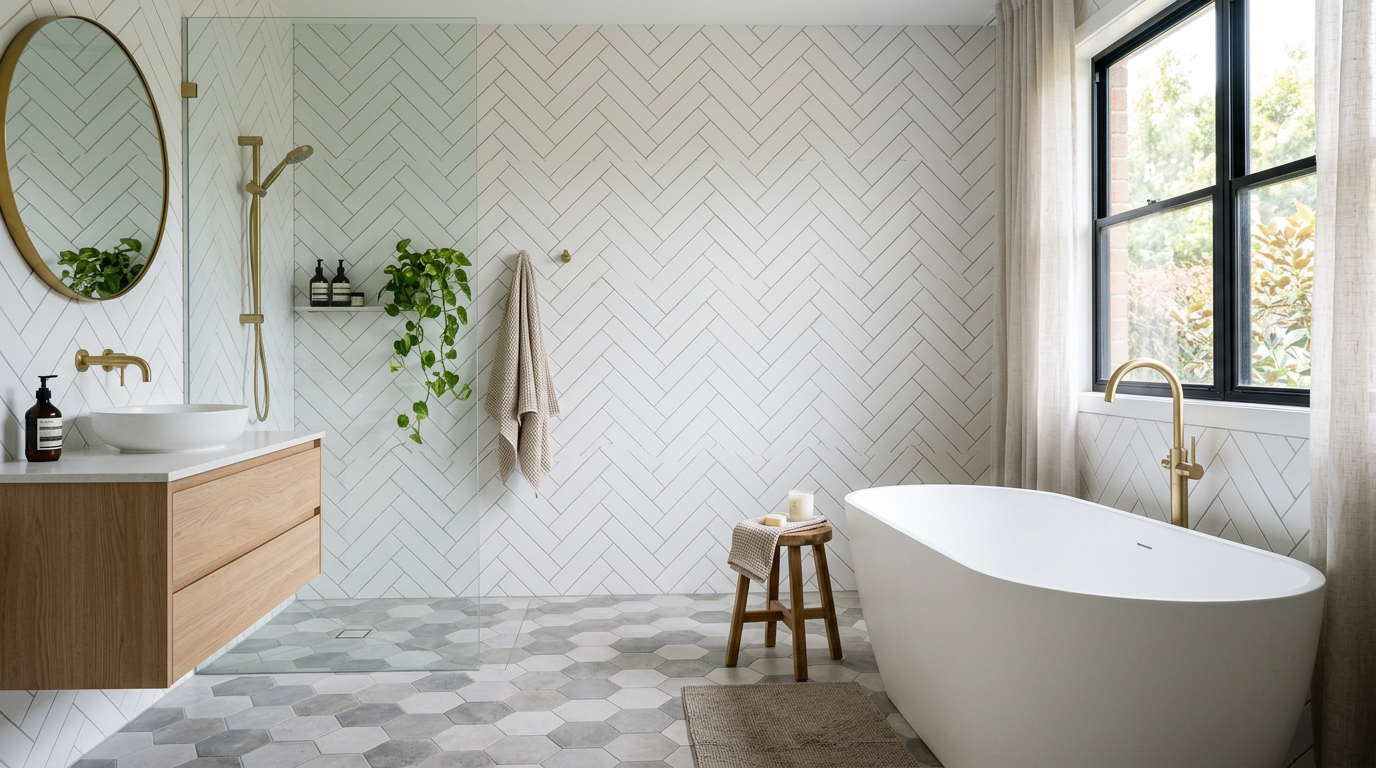
Tile Sets the Bathroom’s Entire Tone
In most bathrooms, tile covers more surface area than anything else. Your tile choice determines whether the room feels sleek, warm, rustic, or luxurious. It’s the single most important material decision in a bathroom renovation.
Tile Materials Compared
Ceramic
Affordable, versatile, and available in endless colors and patterns. Suitable for walls and low-traffic floors. Less durable than porcelain but perfectly adequate for most residential bathrooms.
Porcelain
Denser and harder than ceramic, with better water resistance. Ideal for floors and showers. Available in styles that convincingly mimic natural stone, wood, and concrete at a fraction of the cost and maintenance.
Natural Stone (Marble, Travertine, Slate)
Genuinely luxurious. Each piece is unique. Marble adds elegance, travertine adds warmth, slate adds rustic texture. All require sealing and more maintenance than manufactured tiles, but the beauty is unmatched.
Zellige
Handmade Moroccan tiles with irregular surfaces that catch light beautifully. Each tile varies slightly in color and texture, creating a rich, artisanal look. Popular for backsplashes and feature walls.
Glass
Luminous and reflective, glass tiles add sparkle and depth. Best for accent areas and backsplashes rather than floors (slippery when wet). Available in mosaic sheets for easy installation.
Cement
Handmade cement tiles with bold patterns are perfect for statement floors. They require sealing but develop a beautiful patina over time. Popular in bohemian and Mediterranean-inspired bathrooms.
Floor Tile Considerations
Slip Resistance
Bathroom floors get wet. Choose tiles with adequate grip — a matte or textured finish, small mosaics (more grout lines equals more traction), or tiles with a rated slip resistance. Polished marble on a bathroom floor is beautiful but treacherous.
Size
Large-format floor tiles (12×24, 24×24) reduce grout lines and look clean and modern. Small mosaics (2×2, hexagonal) add texture and vintage charm. Avoid very small tiles outside the shower — they’re harder to clean.
Color
Lighter floor tiles show less water spotting and soap residue. Medium tones (warm gray, greige, soft sand) hide dirt best. Very dark tiles show every water drop and dust particle.
Wall Tile Strategies
Full-Height Tiling
Tiling from floor to ceiling creates a seamless, waterproof, easy-to-clean surface. It’s the premium approach and makes small bathrooms feel more finished.
Wainscot Height
Tiling the lower portion of the wall (typically 36-48 inches) and painting above is a classic, budget-friendly approach. It protects the splash zone while allowing easy color changes above.
Accent Wall
A feature wall in a special tile — behind the vanity or in the shower — adds design impact while keeping costs manageable on the remaining walls.
Pattern Ideas
Herringbone
Rectangular tiles laid in a V-pattern create movement and sophistication. Works beautifully on floors and accent walls.
Subway Stack
Subway tiles stacked vertically rather than in the traditional running bond feel more contemporary and graphic.
Hexagonal
Honeycomb-shaped tiles in marble or porcelain add geometric interest. Small hexagons for vintage charm, large hexagons for modern impact.
Basket Weave
A classic pattern that pairs beautifully with traditional and transitional bathrooms. Usually executed in marble or stone.
Grout Decisions
Color
White grout with white tile is classic but shows staining. Gray grout is more forgiving. Matching grout to tile color creates a seamless look. Contrasting grout (dark with light tile) highlights the tile pattern.
Width
Narrow grout lines (1/16 to 1/8 inch) look modern and clean. Wider lines are traditional and easier to install. Consistency matters more than width.
Sealing
Always seal grout in wet areas. Epoxy grout is more expensive but virtually waterproof and stain-proof — worth the investment in showers.
Budget Strategy
Splurge on the areas you see most — the shower feature wall, the floor, or the vanity backsplash. Use affordable, complementary tiles on less visible surfaces. One stunning tile can carry an entire bathroom when paired with simple basics elsewhere.