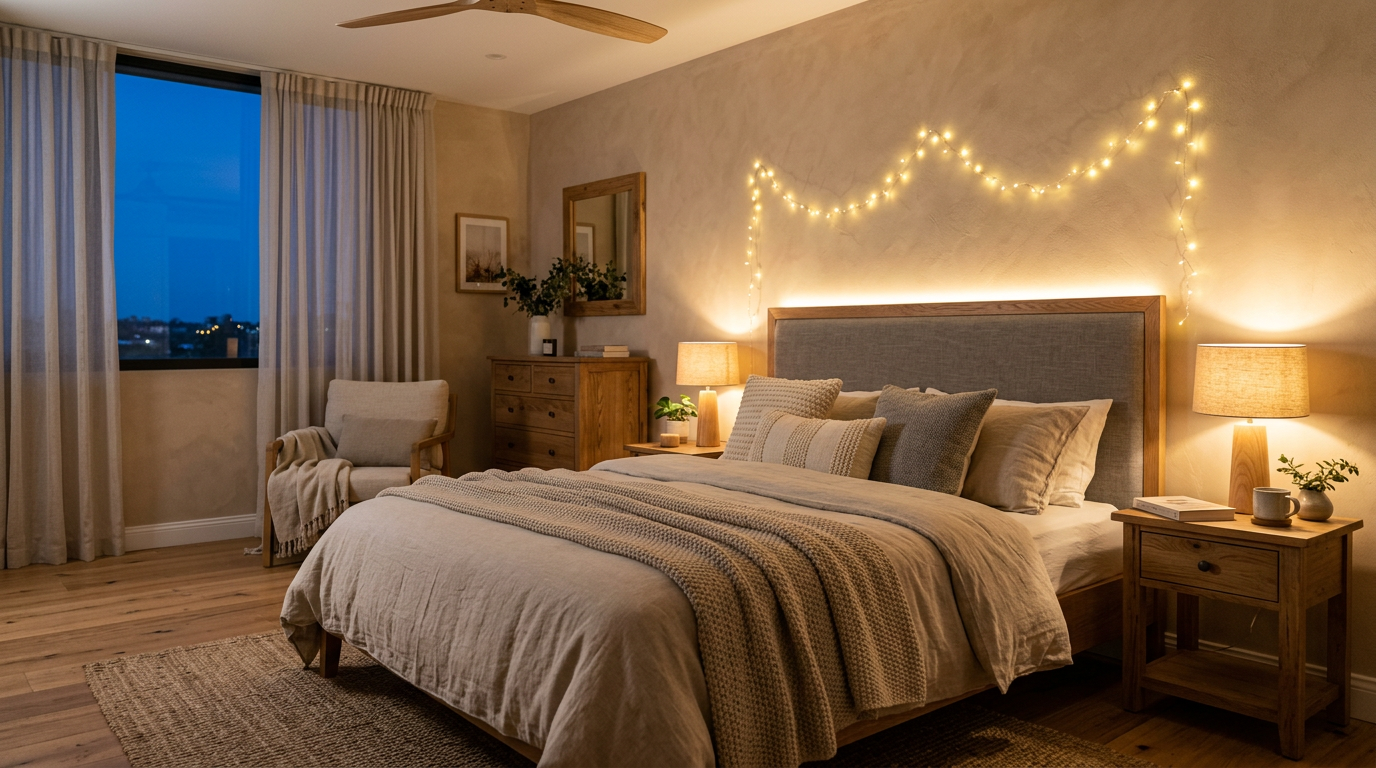
Bedroom Lighting Needs Are Unique
Unlike a living room or kitchen, your bedroom needs to transition from bright enough to get dressed to dark enough to sleep. This range demands a flexible, layered lighting plan that most single-fixture bedrooms fail to provide.
Ambient Lighting Options
Ceiling Fixtures
A statement pendant or flush-mount fixture provides general lighting for dressing and cleaning. Choose one that fits your style — a linen drum shade for warmth, a glass globe for modern, or a rattan pendant for bohemian texture. Always install on a dimmer switch.
Recessed Lighting
If you’re renovating, recessed can lights provide clean, invisible ambient lighting. Space them evenly and control with a dimmer. They work particularly well in rooms with low ceilings where pendant lights would hang too low.
Cove Lighting
LED strips hidden behind a ceiling detail, headboard, or molding create a soft, indirect glow that’s perfect for evening wind-down. This is ambient lighting at its most atmospheric.
Task Lighting for the Bedroom
Bedside Lamps
The most important task lights in any bedroom. Table lamps on nightstands should be positioned so the bottom of the shade is at eye level when you’re sitting up in bed. This directs light onto your book without glaring in your eyes.
Wall-Mounted Reading Lights
Swing-arm sconces or adjustable wall-mounted lights are superior to table lamps for reading. They’re directional, space-saving, and can be aimed precisely. Particularly valuable in small bedrooms.
Closet Lighting
Good closet lighting is underrated. LED strip lights or a simple closet fixture makes getting dressed easier and prevents the common mistake of wearing mismatched colors.
Vanity or Mirror Lighting
If your bedroom includes a dressing area, proper lighting around the mirror is essential. Side-mounted lights at face height provide even, flattering illumination.
Accent Lighting
Under-Bed LED Strips
Subtle LED strips under the bed frame create a floating effect and provide enough light to navigate the room at night without fully waking up. Warm white (2700K) is ideal.
Picture Lights
If you have artwork in the bedroom, a slim picture light or spotlight draws attention to it and adds a gallery-like quality to the room.
Candles
Nothing matches the warmth and romance of candlelight. A cluster of candles on a tray creates a ritual around bedtime. Battery-operated candles offer the glow without the fire risk.
The Ideal Bedroom Lighting Formula
- One ambient overhead fixture on a dimmer
- Two bedside task lights (matched or deliberately mismatched)
- One accent element — candles, LED strip, or picture light
This three-layer approach gives you maximum flexibility across all times and activities.
Bulb Selection
Warm white bulbs (2700K) throughout the bedroom. This color temperature mimics sunset light and supports your circadian rhythm. Avoid cool white or daylight bulbs — they suppress melatonin production and make it harder to fall asleep.
Consider smart bulbs that shift color temperature throughout the evening, starting warmer and dimmer as bedtime approaches.
Common Bedroom Lighting Mistakes
- Only one overhead light — flat, unflattering, and too bright for evening
- Bedside lights that are too small — they need to provide actual reading light, not just a glow
- No dimmers — this is the most critical room for dimming capability
- Cool-toned bulbs — they fight against your bedroom’s restful purpose
- Overhead light directly above the bed — it shines in your eyes when lying down
Automation Worth Considering
A simple smart plug or switch lets you turn off all lights from bed. No more getting up after you’re comfortable to hit the switch. This small convenience makes a meaningful difference in your nightly routine.