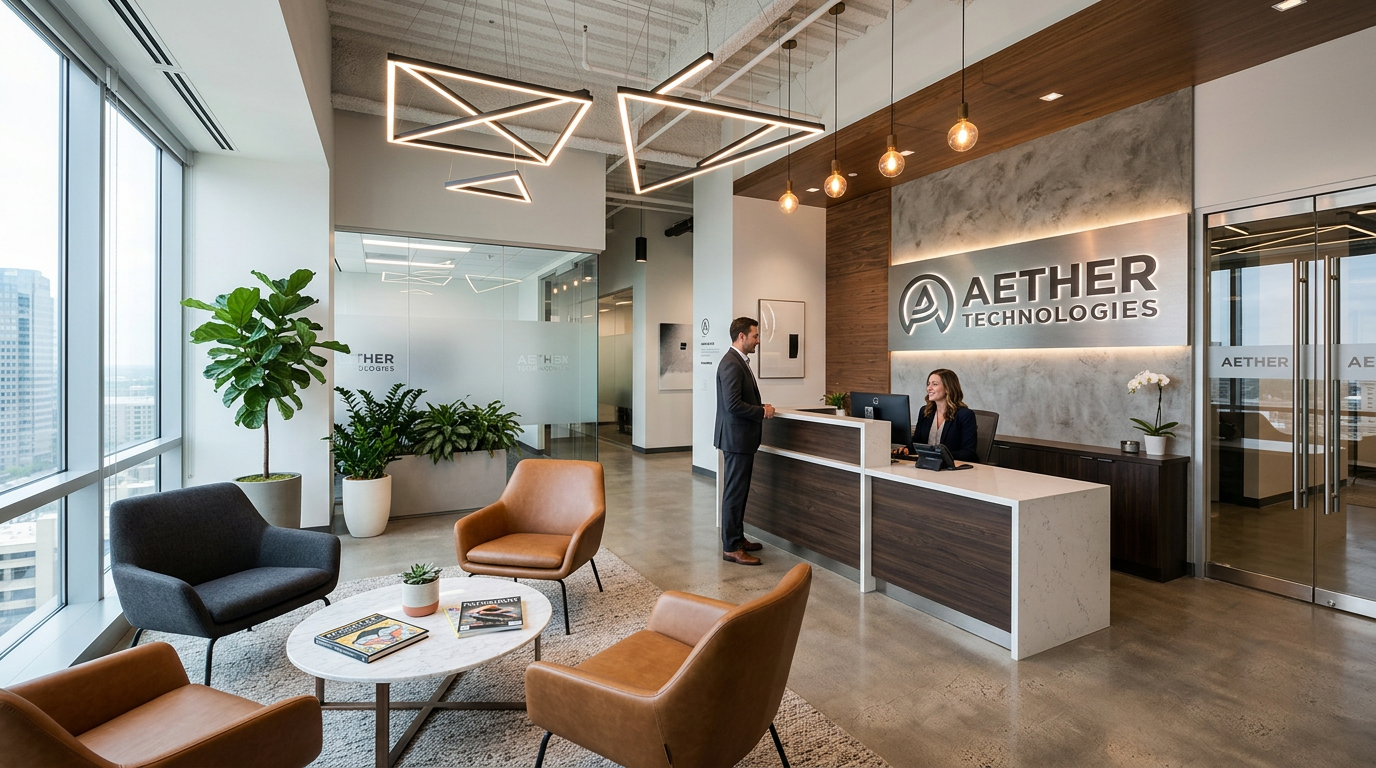
Your Office Is Your Brand in Three Dimensions
Every brand has values, personality, and a visual identity. Your office space should express all three through physical design. When the space matches the brand, employees feel aligned with the mission and visitors experience the brand authentically.
Brand Colors in the Environment
Strategic Placement
Use your brand’s primary color in high-visibility locations: the reception feature wall, conference room accent walls, and signage. Secondary brand colors work for furniture accents, acoustic panels, and accessories.
Don’t Overdo It
A common mistake is saturating the entire office in brand colors. This feels oppressive rather than expressive. Use brand colors as 20-30% of your palette, with the rest in complementary neutrals. The brand should accent the environment, not overwhelm it.
Material Choices as Brand Expression
Innovation Brands
Glass, polished metals, and clean synthetic surfaces communicate forward-thinking precision. Technology companies and startups often benefit from these materials.
Heritage Brands
Rich wood, leather, stone, and traditional millwork communicate established authority and trustworthiness. Professional services, luxury brands, and institutions suit these materials.
Creative Brands
Mixed materials, unusual combinations (concrete and velvet, industrial metal and warm wood), and unique custom pieces communicate creative thinking.
Sustainable Brands
Reclaimed wood, recycled materials, natural textiles, and visible biophilic elements physically demonstrate environmental commitment.
Art and Visual Storytelling
Company History Displays
A timeline wall, a display of legacy products, or framed photographs from company milestones tell your story to visitors and remind employees of shared history.
Values in Art
Commission or curate art that reflects company values. A company focused on innovation might display contemporary art. A company rooted in community might showcase local artists.
Employee and Client Work
Displaying examples of your best work — whether it’s design portfolios, product photography, or client project highlights — shows what you do rather than just telling.
Spatial Branding
Layout as Culture
Open, collaborative layouts communicate transparency and teamwork. Private offices communicate expertise and confidentiality. The physical arrangement of your office is a statement about your working culture.
Naming Conventions
Meeting rooms named after company values, milestones, or industry pioneers reinforce brand identity in daily conversation. It’s subtle but effective.
Wayfinding as Design
Signage, floor markings, and directional graphics can carry your brand’s visual language. Typography, color, and graphic style should match your brand guidelines.
Sensory Branding
Scent
A signature scent in your lobby or common areas creates a multi-sensory brand experience. Hotels and luxury retailers have used this technique for years — offices can too.
Sound
Background music that matches your brand’s energy — calm classical for a luxury brand, upbeat indie for a creative agency — reinforces atmosphere.
Consistency Across Locations
If your company has multiple offices, maintaining design consistency creates brand unity. Develop an office design guide alongside your brand guide — specifying approved colors, materials, furniture, and spatial principles that apply to every location.
Authenticity Matters
The most important principle: your office design must be authentic. A company that claims to value sustainability but has a wasteful, plastic-filled office creates cognitive dissonance. A company that claims to value people but has uncomfortable, ugly workspaces contradicts itself. Design honestly, and your office becomes your most convincing brand statement.