Your Walls Set the Tone
In a home office, your walls are your constant visual environment. What you put on them affects your mood, focus, and creativity throughout the workday. Choose wall decor that energizes and inspires rather than distracts or overwhelms.
Art That Motivates
Abstract Art
Abstract pieces engage your brain without telling it a specific story. They stimulate creative thinking and add color and movement to your workspace. Choose pieces with colors that align with your office color scheme.
Photography
Landscape photography brings nature into your office — particularly valuable if you lack a window with a view. Architecture photography adds structure and sophistication. Travel photography reminds you of the world beyond your desk.
Typography and Quotes
A beautifully designed quote or word can serve as a daily reminder of your values or goals. Keep it genuine — avoid overused motivational clichés. One well-chosen typographic piece is more powerful than a wall full of platitudes.
Mood Boards and Pin Boards
The Working Mood Board
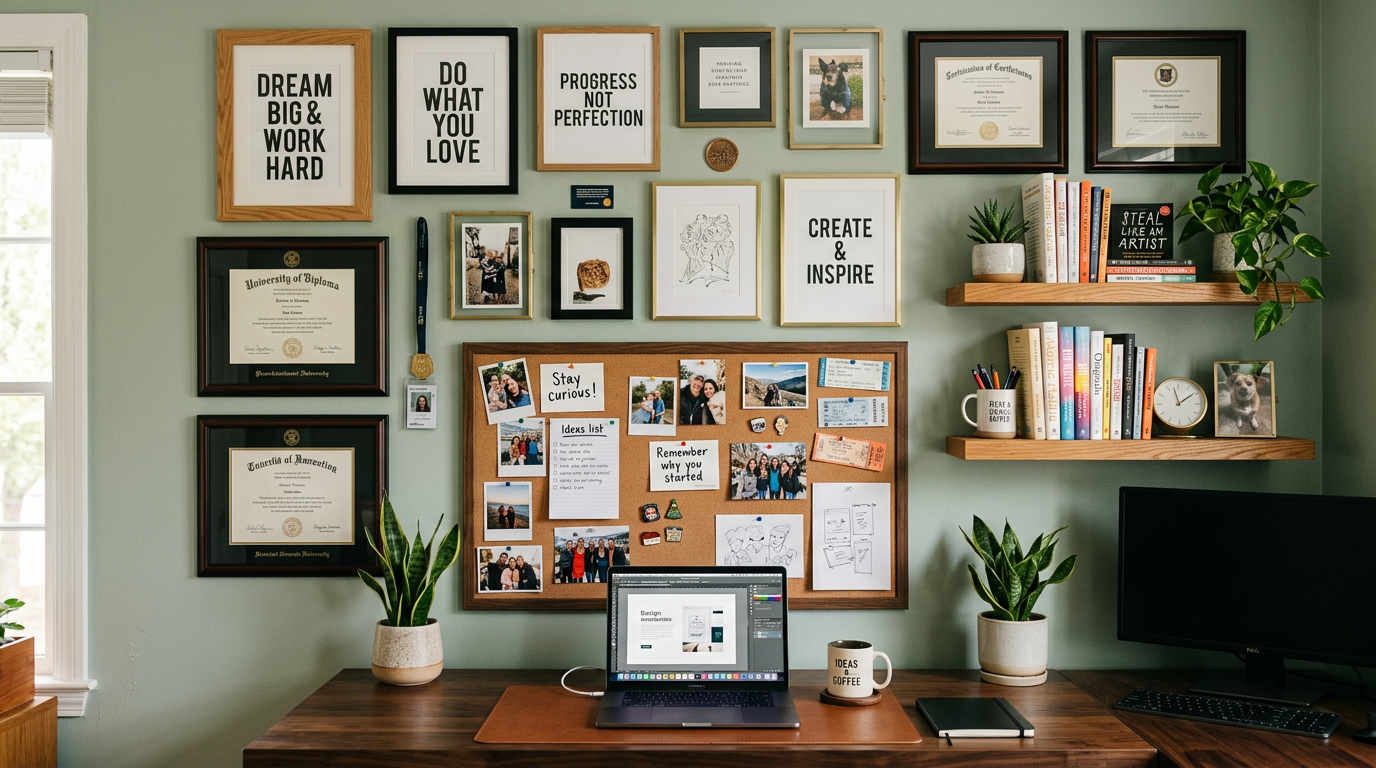
A cork board or pin board near your desk serves as an active creative tool. Pin current project references, color swatches, notes, and inspiration. It’s functional decor that changes with your work.
The Digital Display
A digital frame cycling through inspiration images, project references, or family photos adds a dynamic element. It changes throughout the day, keeping your visual environment fresh.
Shelving as Wall Decor
Styled Floating Shelves
Shelves above or beside your desk hold reference books, small plants, and decorative objects. Style them with intention — group items in threes, vary heights, leave negative space. They’re functional and decorative simultaneously.
Asymmetric Arrangements
Instead of a single long shelf, install two or three shelves at different heights and lengths. This creates a more dynamic, gallery-like arrangement on the wall.
Whiteboards and Planning Walls
A large whiteboard or chalkboard wall serves dual purposes: brainstorming tool and visual element. Frame a whiteboard for a more polished look. Chalkboard paint on one wall creates an entire brainstorming surface. Glass dry-erase boards look especially clean in modern offices.
Maps and Diagrams
World Maps
A large map adds intellectual character and color. Mark places you’ve visited, want to visit, or where your clients are. It adds a global perspective to your daily view.
Architectural Drawings
Blueprints, technical drawings, or architectural diagrams add a sophisticated, cerebral quality to an office wall. Frame vintage engineering drawings for a unique, conversation-starting display.
Gallery Wall for the Office
A curated gallery wall in your office can mix professional achievements (framed certificates, published work), personal inspiration (photos, art), and functional elements (a clock, a small mirror). The mix of personal and professional makes it uniquely yours.
Layout Tips
- Plan the arrangement on the floor first
- Use paper templates taped to the wall before committing
- Keep consistent spacing between frames (2–3 inches)
- Use a mix of frame sizes but limit frame finishes to two (e.g., black and natural wood)
Living Walls and Greenery
Mounted planters, a vertical garden panel, or trailing plants from wall-mounted pots bring biophilic design to your office walls. Combined with the best office plants, a green wall reduces stress and improves air quality while looking stunning.
What to Avoid
- Overly busy patterns — they compete with your focused attention
- Cluttered gallery walls — more isn’t always more in a workspace
- Nothing at all — blank walls feel cold and uninspiring
- Heavy, dark artwork in small offices — it can make the space feel oppressive
- Anything that requires frequent maintenance — your walls should support your work, not add tasks to your day