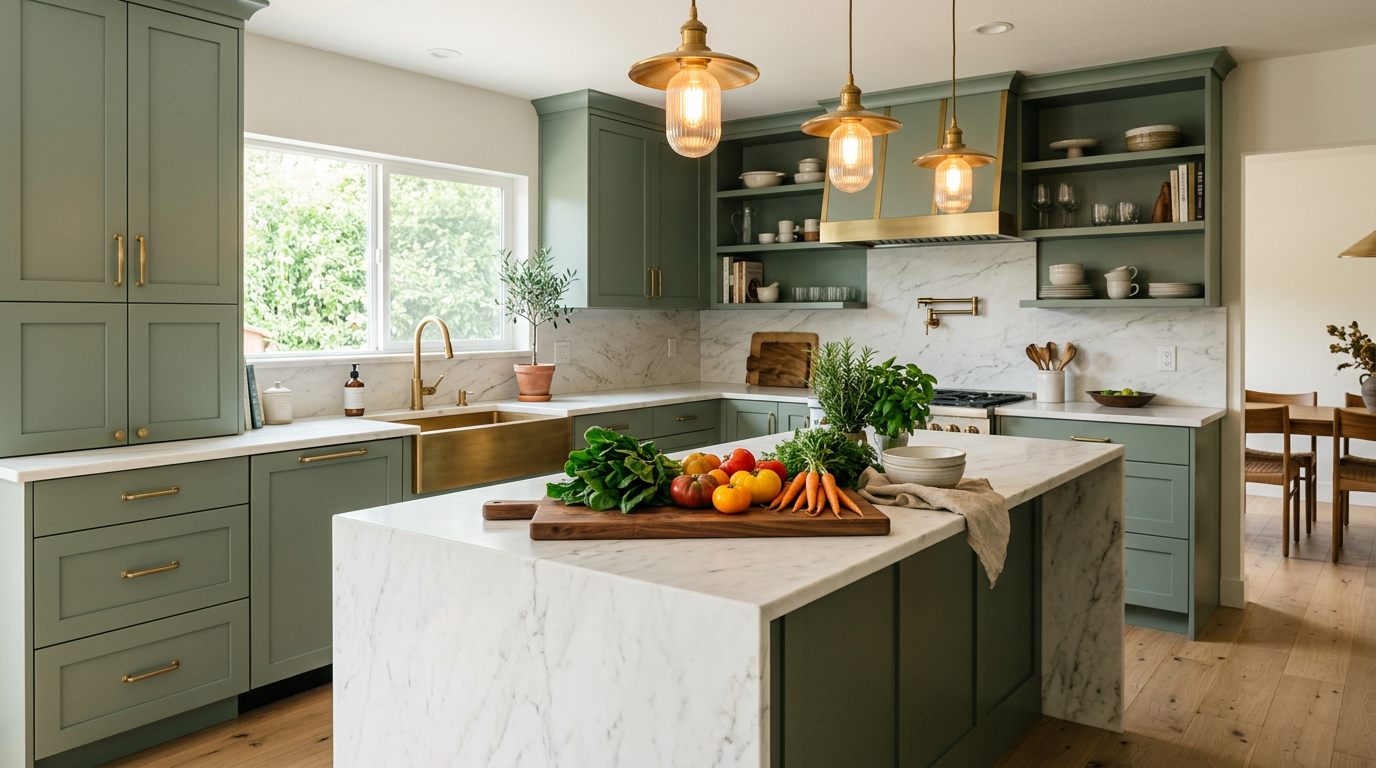
Kitchen Color Is Getting Bolder
After years of all-white kitchen dominance, color has returned with confidence. The kitchens of 2026 embrace warmth, earthiness, and personality through intentional color choices that make the space feel collected and personal.
The Leading Colors
Sage Green
Sage continues its reign as the most popular alternative to white. It’s calming, connects to nature, and works with virtually every material — wood, marble, brass, black iron. Sage on cabinets with white countertops and brass hardware is a current classic.
Warm Whites and Cream
Pure, stark white is yielding to warmer alternatives. Cream, ivory, and warm white create the same bright, open feeling without the clinical edge. These tones feel more natural and comfortable, especially under warm lighting.
Terracotta and Clay
Earth-toned kitchens reflect the broader wabi-sabi trend. Terracotta cabinets, clay-toned walls, and warm stone surfaces create kitchens that feel grounded and organic. Pair with raw wood and matte finishes.
Navy and Deep Blue
Navy kitchens remain strong, particularly for lower cabinets and islands. The depth of navy creates sophistication, especially with brass or gold hardware and white or marble countertops.
Charcoal and Dark Gray
Dark, moody kitchens suit modern and urban spaces. Charcoal cabinets with a lighter countertop and backsplash create drama without total darkness. Matte finishes in dark tones feel especially current.
Mushroom and Greige
The soft intersection of gray and beige — variously called mushroom, greige, or putty — provides a sophisticated neutral that’s warmer than gray and more modern than beige.
Color-Drenched Kitchens
The trend of painting cabinets, walls, and trim the same rich color creates an immersive, cocoon-like kitchen. A deep green kitchen where everything is the same shade feels dramatic and intentional. This approach works best in kitchens with good natural light and when balanced with lighter countertops.
Two-Tone Cabinets
A lighter color on upper cabinets (or open shelving) and a deeper color on lowers creates visual weight and interest. Common combinations: white uppers with sage, navy, or charcoal lowers. Wood uppers with painted lowers. This approach prevents large color blocks from feeling monotonous.
Accent Colors
Brass and Gold
Warm metal hardware and fixtures continue to dominate. Unlacquered brass that develops a patina feels especially authentic and elevated.
Matte Black
Black hardware, faucets, and light fixtures remain a strong accent against lighter cabinets. The contrast is graphic and modern.
Terracotta and Rust Accents
Accessories, backsplash tiles, and textiles in warm rust and terracotta tones add warmth to neutral kitchens.
What’s Fading
Stark White Everything
All-white kitchens are moving to the background. Not disappearing, but yielding dominance to warmer, more characterful alternatives.
Gray
Cool gray as a primary cabinet color has cooled significantly. It’s been replaced by warmer greige tones and actual colors.
Matchy-Matchy
Kitchens where every element matches perfectly feel less current than those with intentional contrast and collected character.
Choosing Timeless Over Trendy
Trends cycle. If you’re investing in a kitchen renovation, choose a base color you genuinely love rather than chasing the trendiest option. Sage green and warm white are safe bets for longevity. Bolder choices like terracotta or charcoal may date faster but make a stronger personal statement. Use timeless principles and let trends influence accents and accessories rather than permanent fixtures.