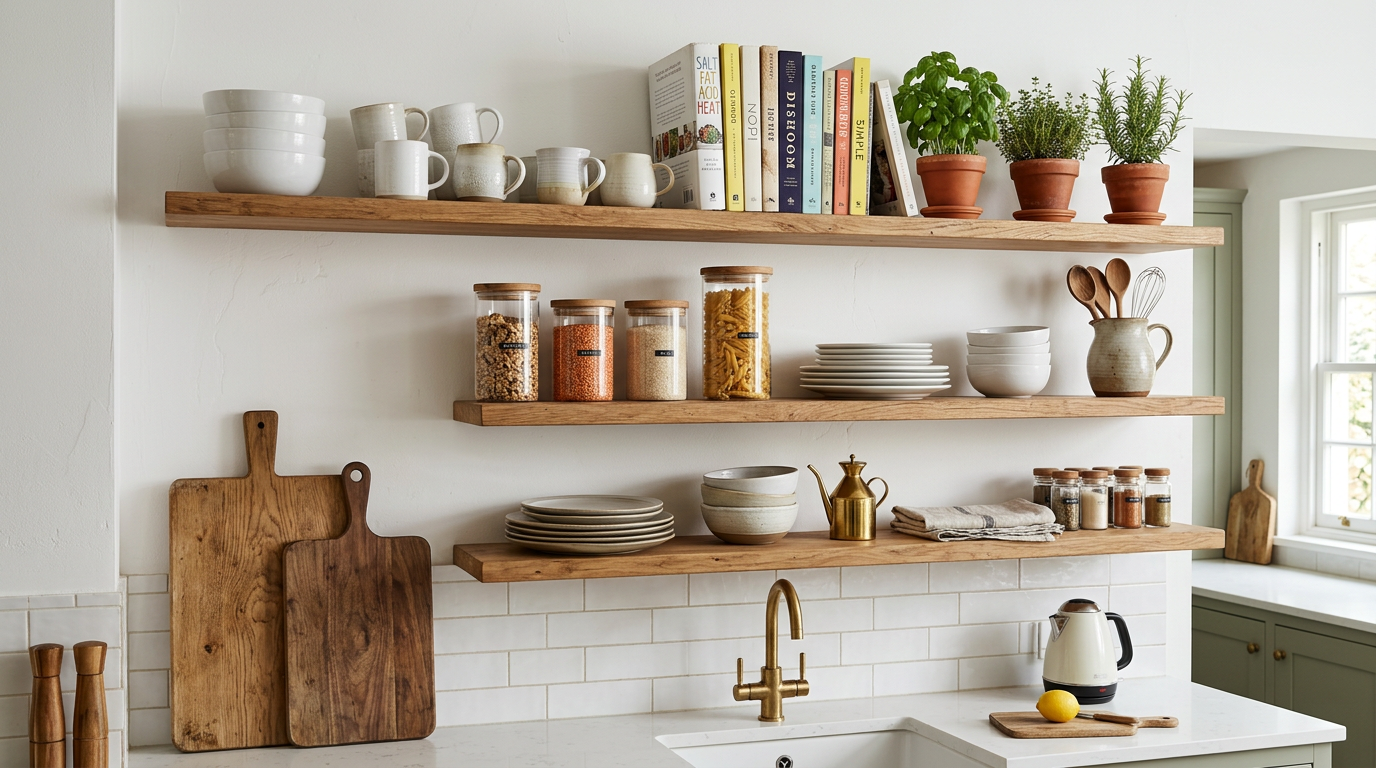
Open Shelves: Beautiful but Demanding
Open kitchen shelving looks stunning in photos and in real life — when done well. It forces you to curate, edit, and maintain a display that serves both function and beauty. If you’re willing to put in the effort, the result is a kitchen with genuine personality.
What Belongs on Open Shelves
Daily Dishes
Your most-used plates, bowls, and mugs earn prime shelf real estate. Choose dishware in a cohesive color palette. White is classic. Neutral stoneware is warm. A bold color like deep blue or terracotta adds character.
Cookbooks
Lean your favorites against the wall on a shelf. Three to five books in a group, organized by height or color, add warmth and personality.
Cooking Essentials
Olive oil in a beautiful bottle, salt in a cellar, frequently used spices in matching jars. Keep these at arm’s reach on lower shelves near the stove.
Decorative Items
A small plant, a ceramic vase, a wooden cutting board leaned against the wall, a vintage crock. These items fill gaps and add visual interest.
What Doesn’t Belong
- Plastic containers and packaging
- Rarely used appliances
- Mismatched, chipped, or stained items
- Cleaning supplies
- Anything you’d be embarrassed for guests to see
Styling Principles
The Triangle Rule
Arrange items in triangular formations — group three items of varying heights. This creates natural visual movement across the shelf.
Lean and Layer
Lean cutting boards, trays, and artwork behind stacked items for depth. Layering creates dimension that flat-on-the-shelf placement can’t achieve.
Leave Breathing Room
Don’t pack every inch. Empty space between groupings prevents the shelves from looking like a cluttered cabinet without doors. Aim for 30-40% empty space.
Group by Function
Cluster mugs together, stack plates together, group oils and spices together. Functional groupings make sense to the eye and to daily use.
Material and Color Coordination
Choose shelf items within a limited color palette. The Instagram-perfect all-white kitchen shelf exists because it’s visually calm. A palette of white, wood, green (plants), and one accent color works universally.
Match metals too — if your shelf brackets are brass, lean toward brass or gold accents in accessories. If brackets are black, coordinate with matte black details.
Shelf Material and Installation
Floating Wood Shelves
Thick wood shelves with hidden brackets are the most popular option. They look clean, substantial, and complement every kitchen style.
Metal and Wood Combination
Industrial-style shelving with metal brackets and wood planks suits modern and farmhouse kitchens. The exposed hardware becomes part of the aesthetic.
Depth Matters
Standard shelf depth for kitchens is 10-12 inches — enough for plates and bowls with space for items in front and behind.
Maintenance Reality
Open shelves collect dust and kitchen grease. Wipe shelves and displayed items weekly (or more in heavy-cooking kitchens). Dishware you use daily stays clean naturally — it’s the decorative items that need attention. If you’re not willing to maintain them, open shelving might not be for you. Closed upper cabinets are a perfectly valid choice.
Mixing Open and Closed
You don’t have to go all open or all closed. A common approach is open shelves on one wall or section with closed cabinets handling the heavy storage. This gives you the display benefits without requiring everything to be photogenic.