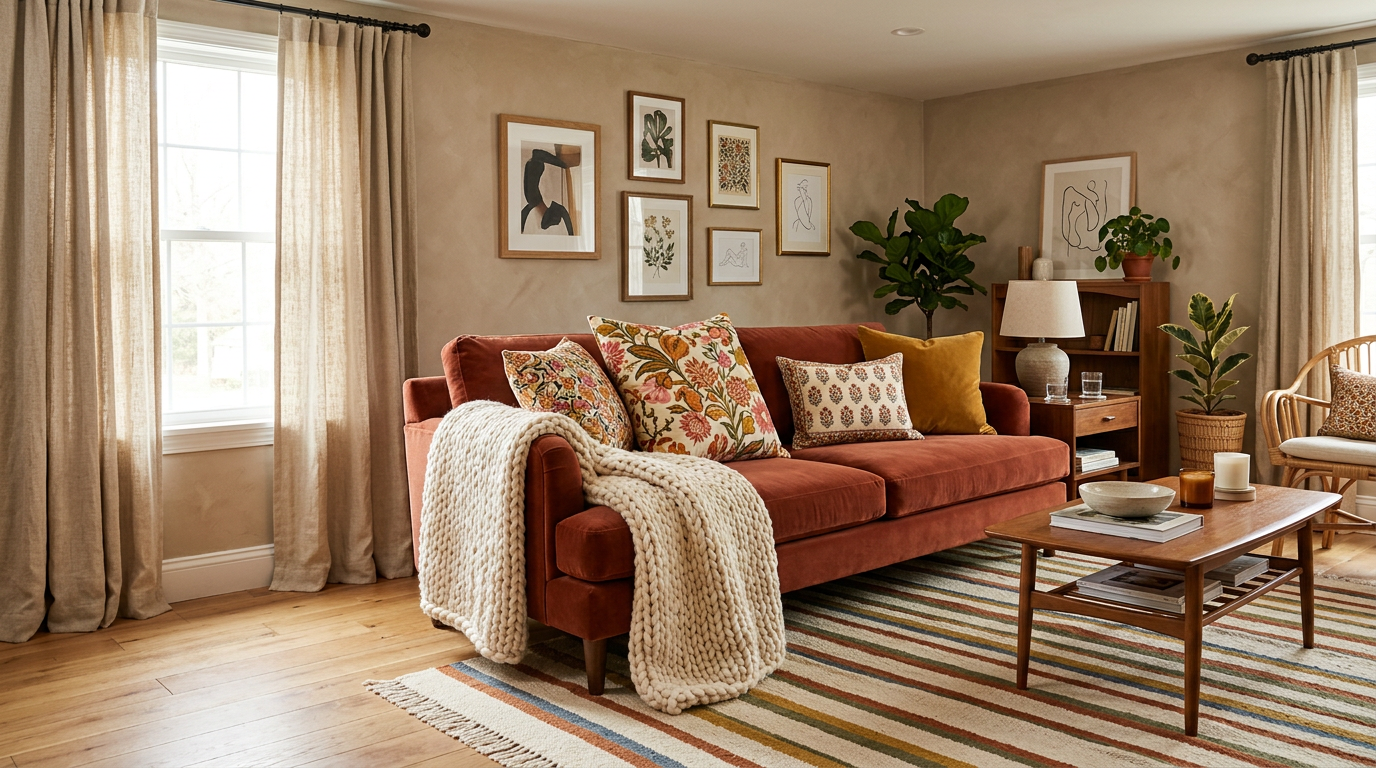
Why Pattern and Texture Mixing Matters
A room with no pattern or texture variation feels flat and lifeless. But a room where every surface competes for attention feels chaotic. The sweet spot — a curated mix of complementary patterns and varied textures — gives your living room personality, depth, and visual richness.
The Rules of Pattern Mixing
Vary the Scale
The most important rule: combine patterns of different scales. A large-scale floral, a medium-scale geometric, and a small-scale stripe can coexist beautifully. Using all the same scale creates visual vibration that feels unsettling.
Connect With Color
Patterns that share at least one color will feel cohesive even when they’re visually very different. A blue-and-white striped pillow works alongside a blue floral curtain because the blue ties them together. Anchor your patterns within your chosen color palette.
Mix Pattern Types
Combine different categories of pattern:
- Organic — florals, botanicals, animal prints
- Geometric — stripes, checks, chevrons, hexagons
- Textural — damask, herringbone, tweed
A room with a floral, a stripe, and a herringbone feels considered. Three different florals feels confused.
The Rule of Three
Three patterns in a room is a reliable starting point. One dominant pattern on your largest surface (curtains or a rug), one supporting pattern on medium surfaces (pillows or an accent chair), and one subtle pattern on small surfaces (a throw or lampshade).
Layering Textures
Smooth Against Rough
A polished marble coffee table next to a chunky knit throw. A sleek leather sofa with a nubby wool pillow. Smooth metals paired with raw wood. These contrasts create visual interest even in a monochromatic room.
Soft Against Hard
Balance hard surfaces (glass, metal, stone) with soft ones (fabric, carpet, upholstery). A room dominated by hard surfaces feels cold and echoey. Too much softness feels shapeless. Mix them.
Matte Against Sheen
A matte ceramic vase next to a polished brass lamp. Linen curtains framing a glossy-framed mirror. These subtle contrasts add sophisticated dimension.
Practical Combinations That Work
Classic Comfort
Toile or traditional floral curtains, ticking stripe pillows, a paisley or damask throw. Connected by a blue or red color thread, this combination feels timeless and layered.
Modern Edge
Geometric rug, solid textured sofa in bouclé or performance linen, color-blocked pillows. Clean but not boring, with interest coming from texture variation rather than busy patterns.
Bohemian Layer
Kilim or Persian rug, block-printed pillow covers, a mud cloth or ikat throw, macramé wall hanging. Patterns are mixed freely but united by earthy, warm tones.
Scandinavian Calm
Subtle stripe rug, solid sofa with textured weave, simple graphic print pillow. Restrained pattern use with heavy emphasis on texture — linen, wool, sheepskin, light wood.
Where to Add Pattern and Texture
- Rugs — the largest pattern opportunity. A patterned rug grounds the room
- Pillows — the easiest place to experiment. Swap them seasonally
- Curtains — a subtle pattern or rich texture adds softness to the room
- Throws — chunky knits, woven cottons, or fringed wool add tactile interest
- Upholstery — a patterned accent chair or textured sofa fabric
- Wallpaper — a statement wall in a bold pattern
When in Doubt
If pattern mixing feels intimidating, start with textures only. Keep everything solid-colored but vary the materials — velvet, linen, leather, wool, cotton, wood. This creates visual richness without the complexity of pattern coordination. Once you’re comfortable, introduce one pattern at a time.
Common Mistakes
- All patterns, no solids — solid surfaces give the eye a place to rest
- Same-scale patterns — always vary the scale
- No color connection — without a shared color, patterns feel random
- Forgetting the floor — rugs are the largest design element and should be part of your pattern strategy
- Playing it too safe — sometimes the unexpected combination is the most beautiful