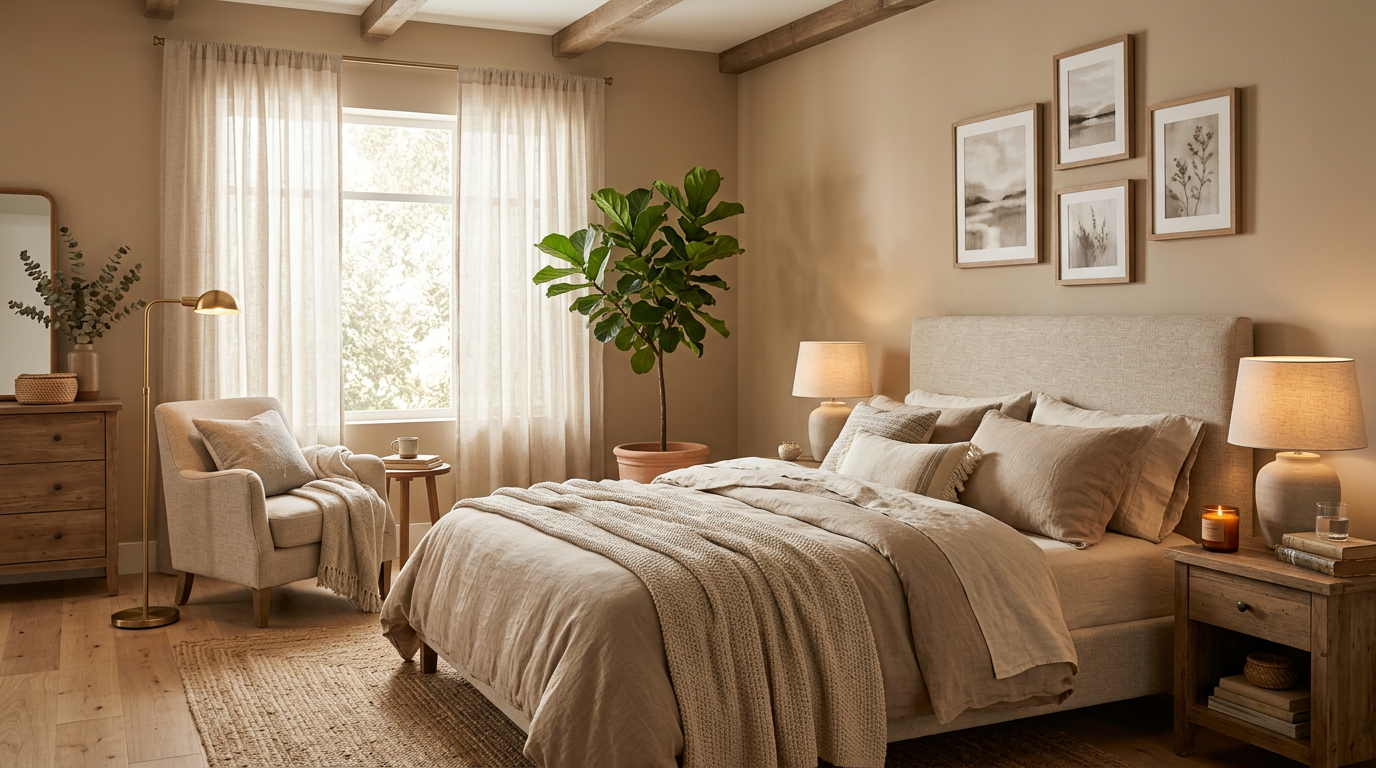
Your Bedroom Should Be Your Sanctuary
Unlike any other room, your bedroom exists primarily for rest. Every design decision should support that purpose — from the colors on the walls to the textures against your skin. A bedroom that looks beautiful but keeps you wired isn’t doing its job.
Colors That Calm
Soft Blues
Blue is consistently linked to feelings of calm and reduced heart rate. Pale sky blue, dusty blue, and soft slate create a serene backdrop. Pair with white linens and natural wood for a classic, tranquil bedroom.
Warm Neutrals
Creamy whites, soft taupes, and pale beiges feel enveloping without being cold. These tones create a cocoon-like atmosphere and work with virtually any accent color. They also look beautiful in both natural and artificial light.
Sage and Muted Greens
Green connects us to nature and promotes relaxation. Sage, olive, and eucalyptus tones bring the outside in without overwhelming the space. These tones pair beautifully with linen textures and raw wood.
Dusty Rose and Lavender
Soft pinks and muted purples add warmth and romance without being juvenile. These tones work particularly well in north-facing rooms that need warming up.
Colors to Avoid
Bright reds, intense oranges, and vivid yellows stimulate rather than soothe. Save these for living spaces and home offices where energy is desired. Your bedroom wants the opposite.
Textures That Invite Touch
Bedding Layers
Layer your bed with textures that feel different against the skin. Crisp cotton sheets, a soft duvet cover, a chunky knit throw at the foot, and a mix of pillow textures — smooth sateen, nubby linen, plush velvet. This layering creates visual richness and sleeping comfort. Learn more in our bedding guide.
Underfoot Comfort
A plush rug beside the bed makes the first step of your morning a pleasure. Wool, shag, or high-pile cotton rugs add warmth and sound absorption. Read our bedroom rug guide for sizing and placement tips.
Window Treatments
Heavy, lined curtains block light for better sleep and add a soft, luxurious layer to the room. Linen curtains filter light beautifully during the day. Either way, floor-length curtains feel more restful than hard blinds.
Wall Textures
A textured accent wall behind the bed — upholstered headboard wall, limewash plaster, or subtle wallpaper — adds depth without visual noise.
Creating Atmosphere
Lighting for Rest
Avoid harsh overhead lighting. Instead, use bedside table lamps with warm-toned bulbs, wall-mounted reading lights, and perhaps a dimmer on any ceiling fixture. The bedroom should transition from soft ambient light in the evening to near-darkness for sleep.
Scent
Lavender, chamomile, and sandalwood promote relaxation. A linen spray, a bedside diffuser, or a scented candle (blown out before sleep) engages another sense in your calming routine.
Sound
Consider the acoustic quality of your bedroom. Soft surfaces — rugs, curtains, upholstered headboard — absorb sound and create a quieter environment. A white noise machine or quiet fan adds consistent, soothing background sound.
Declutter for Calm
A cluttered bedroom is not a restful bedroom. Keep surfaces minimal — bedside tables should hold only what you need nightly. Use beautiful storage solutions to keep everything else out of sight. The visual quiet of clean surfaces translates directly to mental calm.
Technology-Free Zone
Consider keeping screens out of the bedroom entirely. If that’s not realistic, at least create a charging station away from the bed so the phone isn’t the last thing you see at night and the first thing you reach for in the morning.
Bringing It Together
Start with your wall color, then choose bedding that complements it. Add texture through a rug, curtains, and throw pillows. Keep accessories minimal but meaningful — a single vase of flowers, a beloved book, a beautiful candle. The goal is a room that makes you take a deep breath and relax the moment you walk in.