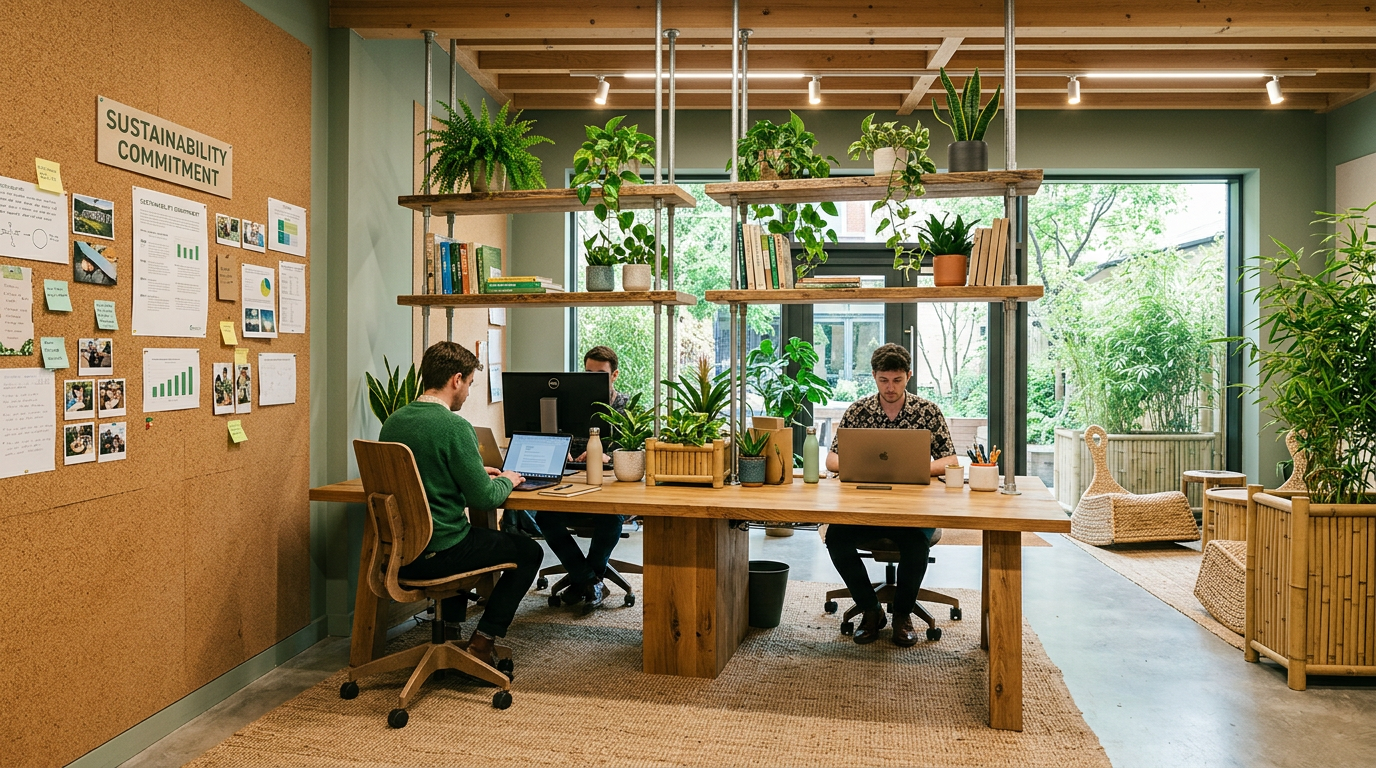
Sustainable Design Is Smart Business
Eco-friendly office design isn’t just ethical — it’s practical. Sustainable materials often last longer, energy-efficient design reduces operating costs, and employees increasingly expect their workplace to reflect environmental values. It’s where doing good and doing well align.
Sustainable Materials
Reclaimed and Recycled
Reclaimed wood desks, recycled metal fixtures, and furniture made from recycled plastics divert materials from landfills while adding character. Reclaimed wood in particular carries a history and patina that new materials can’t replicate.
Certified Wood
When using new wood, look for FSC (Forest Stewardship Council) certification, which ensures responsible forestry practices. This applies to furniture, flooring, shelving, and millwork.
Natural and Renewable
Bamboo (a fast-growing grass, not a tree), cork (harvested without killing the tree), wool, organic cotton, and linen are all renewable materials that perform beautifully in office environments.
Low-VOC Everything
Volatile organic compounds in paints, adhesives, and finishes off-gas harmful chemicals. Choose low-VOC or zero-VOC paints, natural oil finishes on wood, and water-based adhesives. Your air quality — and your team’s health — will benefit.
Furniture Choices
Buy for Longevity
The most sustainable piece of furniture is one that lasts decades. Invest in well-made, timeless designs rather than trendy pieces that will be replaced in five years. Quality over quantity reduces waste.
Secondhand and Refurbished
Pre-owned office furniture is abundant, affordable, and sustainable. Vintage desks, refurbished chairs, and secondhand shelving reduce demand for new manufacturing while adding character.
Local Manufacturing
Furniture made locally reduces transportation emissions and supports your regional economy. Many cities have furniture makers producing high-quality office pieces from local and sustainable materials.
Modular Systems
Modular furniture adapts to changing needs without replacement. Desk systems that reconfigure, shelving that expands, and seating that rearranges extend product lifetimes.
Energy Efficiency
LED Lighting
Replace all lighting with LED. It uses 75% less energy than incandescent and lasts 25 times longer. Combine with sensors that turn off lights in unoccupied rooms and dimmers that reduce output when natural light is sufficient.
Smart Climate Control
Programmable thermostats, zone-based heating and cooling, and sensors that respond to occupancy reduce energy waste. Even simple actions like programming setback temperatures for nights and weekends make a meaningful difference.
Natural Light
Maximizing daylight reduces electricity consumption while improving employee wellbeing. This is where biophilic design and sustainability align perfectly.
Waste Reduction
Go Paperless
Digital document management, electronic signatures, and digital collaboration tools dramatically reduce paper consumption. When printing is necessary, use recycled paper and default to double-sided printing.
Recycling Infrastructure
Make recycling effortless with clearly labeled bins in convenient locations. Include separate streams for paper, plastic, glass, and compost.
Reusable Over Disposable
Replace disposable cups, plates, and cutlery with reusable alternatives in the kitchen. A dishwasher is more sustainable than a cabinet full of paper products.
Indoor Air Quality
Plants
Living plants filter air pollutants including formaldehyde, benzene, and trichloroethylene — common off-gassing chemicals from office furniture and finishes. A few plants per 100 square feet meaningfully improves air quality.
Ventilation
Adequate fresh air exchange is fundamental. Open windows when possible, maintain HVAC filters on schedule, and consider air purifiers in sealed buildings.
Communicating Your Commitment
Display your sustainability efforts authentically — not as greenwashing but as genuine practice. A small plaque about reclaimed materials, a note about your recycling program, or a visible herb garden in the kitchen demonstrates commitment through action rather than claims.
Sustainable office design is a journey, not a destination. Every improvement matters. Start with the changes that deliver the biggest environmental benefit for your budget and build from there.