One Room, Multiple Lives
A studio apartment asks a single space to be your bedroom, living room, dining room, and possibly home office. The challenge isn’t the size — it’s the multitasking. With intentional layout planning, your studio can feel like a well-designed small home rather than a crowded room.
Layout Strategies
The Linear Approach
Arrange zones in a line from the entrance to the back: entry/dining near the door, living room in the middle, bedroom at the far end (most private). This creates a natural progression from public to private.
The Split Layout
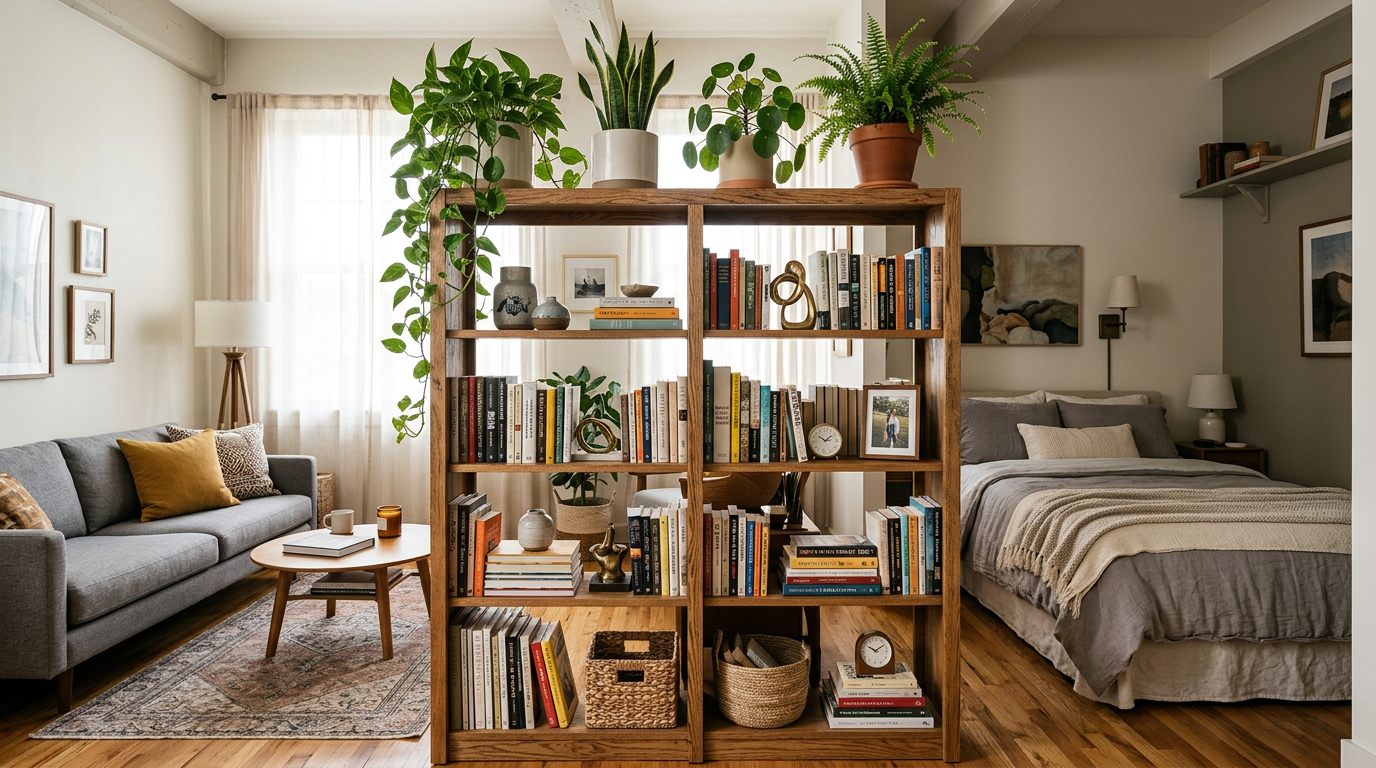
Divide the studio roughly in half. One half for living and dining, the other for sleeping and dressing. A bookshelf, curtain, or sofa back creates the divider.
The Island Approach
Place the bed in the center of the room (if the studio is wide enough) and create living zones around it — desk behind the headboard, seating facing the opposite direction. Unconventional but space-efficient.
Zoning Without Walls
Furniture as Dividers
The back of a sofa creates a visual boundary between living and sleeping areas. A bookshelf oriented perpendicular to the wall divides the room while providing storage on both sides.
Rugs Define Areas
A rug under the living area and another beside the bed signal distinct zones. Different rug styles or sizes reinforce the separation.
Curtains and Screens
A ceiling-mounted curtain track around the bed area lets you close off the sleeping zone completely. A folding screen provides instant privacy without installation.
Lighting Zones
Different lighting in different areas reinforces the zones. A pendant over the dining area, a floor lamp beside the sofa, and bedside table lamps create three distinct atmospheres.
Level Changes
If feasible, a raised platform for the bed creates a distinct bedroom zone and provides under-platform storage.
Furniture Essentials
The Right Bed
A daybed functions as a sofa during the day and a bed at night. A murphy bed disappears entirely. A loft bed frees the entire floor area beneath for living space. A standard bed with a beautiful headboard and styled bedding looks intentional rather than dormitory-like.
Multifunctional Pieces
A dining table that serves as a desk. An ottoman with storage that serves as coffee table, seating, and footrest. A console behind the sofa that holds a mirror above and books below while defining the zone boundary. Every piece earns its place by serving multiple purposes.
Scale-Appropriate Furniture
Avoid full-size furniture in a studio. Apartment-scale sofas (72 inches or less), compact dining tables (round is most space-efficient), and slim-profile shelving keep the room feeling proportional.
Storage is Everything
Studios have limited closet space, so built-in and furniture storage must compensate:
- Under-bed storage — the most valuable hidden space in a studio
- Vertical shelving — floor-to-ceiling shelving units maximize wall space
- Over-door organizers — for closets and bathroom doors
- Dual-purpose furniture — beds with drawers, benches with storage, tables with shelves
Making It Feel Larger
Light colors on walls, consistent flooring throughout, large mirrors, and minimal clutter all expand the perceived size. For more techniques, see our guides on making rooms feel bigger with color and mirror tricks.
Personal Style Still Matters
Living small doesn’t mean living bland. Choose a decor style you love and apply it consistently throughout the studio. A cohesive aesthetic makes a small space feel intentional. Random, uncoordinated pieces make it feel chaotic.